This is the first post in a series on some of London’s 20th century cinemas, with my own photos from 2026, unless shown otherwise. I visited those that I found most remarkable and picturesque architecturally, some of which still show films, while others have lived on as churches, pubs, or bingo halls. With their role in high culture and their usefulness slightly open to debate, their current imposing physicality as strongholds of high life and all-immersing entertainment is a fact and reminder of a now distant past. These landmarks of popular cinematography and points of shared social experience offered regular relief from an otherwise mundane middle-class and lower middle-class life of 20th century Britain.
A visitor to today’s Islington will see very different mascaras depending on the time of day or day of the week. Early Sunday morning near Highbury and Islington tube station will show international students out and about early to make it to the brunch with friends, hoping to make inroads into houseshares with a more intellectual edge. It will show the young professional female from East Asia returning from her early morning jog. It will show the first generation African agency worker on his way to the day’s shift in Golders Green, to stand around in one of Sainsbury’s Local as its contracted security guard. He will try to round up uncomfortable arguments with local twelve-year-olds trying to infiltrate the supermarket’s aisles to grab extra bags of crisps, soft drinks, or chocolate bars while only paying the sleepy cashier for the bottle of sprite or the packet of digestive biscuits.
Right now, we are standing around at the nearby bus stop; he has the strap of his sports bag around his shoulder; I pop a can of diet coke to pass the time. We are staring into the empty stretch of Holloway Road behind us, waiting for the right bus to arrive. We both see the neighbourhood slowly coming to life — with a Mediterranean-looking business owner sleepily lifting the retail blinds of the next café; a young, slim library worker on his weekend break dropping a rubbish bag outside his house as he sets off to a one-day trip to the countryside. The security guard and I both spot a grey-bearded junkie in slippers and boxing shorts over wrinkly legs shuffle to the street’s rubbish bin. Reaching into it, his arm disappears inside, way into into the opening under the cover. Instead of fishing for food or empty soda cans, he reaches upwards, to the bottom of the cover, and we hear something click which gets hidden in his hand before he scurries back into the alley. Clearly a cover-up for a daily drug-supply. The piles of full bin bags from the night, placed dutifully over the pavement covered in dried beer- and brown piss don’t invite us to explore further into the narrow, shaded courtyard of the housing block that keeps the junkie out of sight.
Just after a few bus stops, Screen on the Green is a quiet, refreshing beauty standing on one of Islington’s main streets (83 Upper Street, London, N1 0NP). With its single-screen features, it has not ceased to make a dent in North London’s cultural life. Known as the Empress Picture Theatre between 1913-1951, and The Rex (1951-1970), Everyman Screen on the Green offers screenings with premium services such as plush armchair seating and licenced bars.
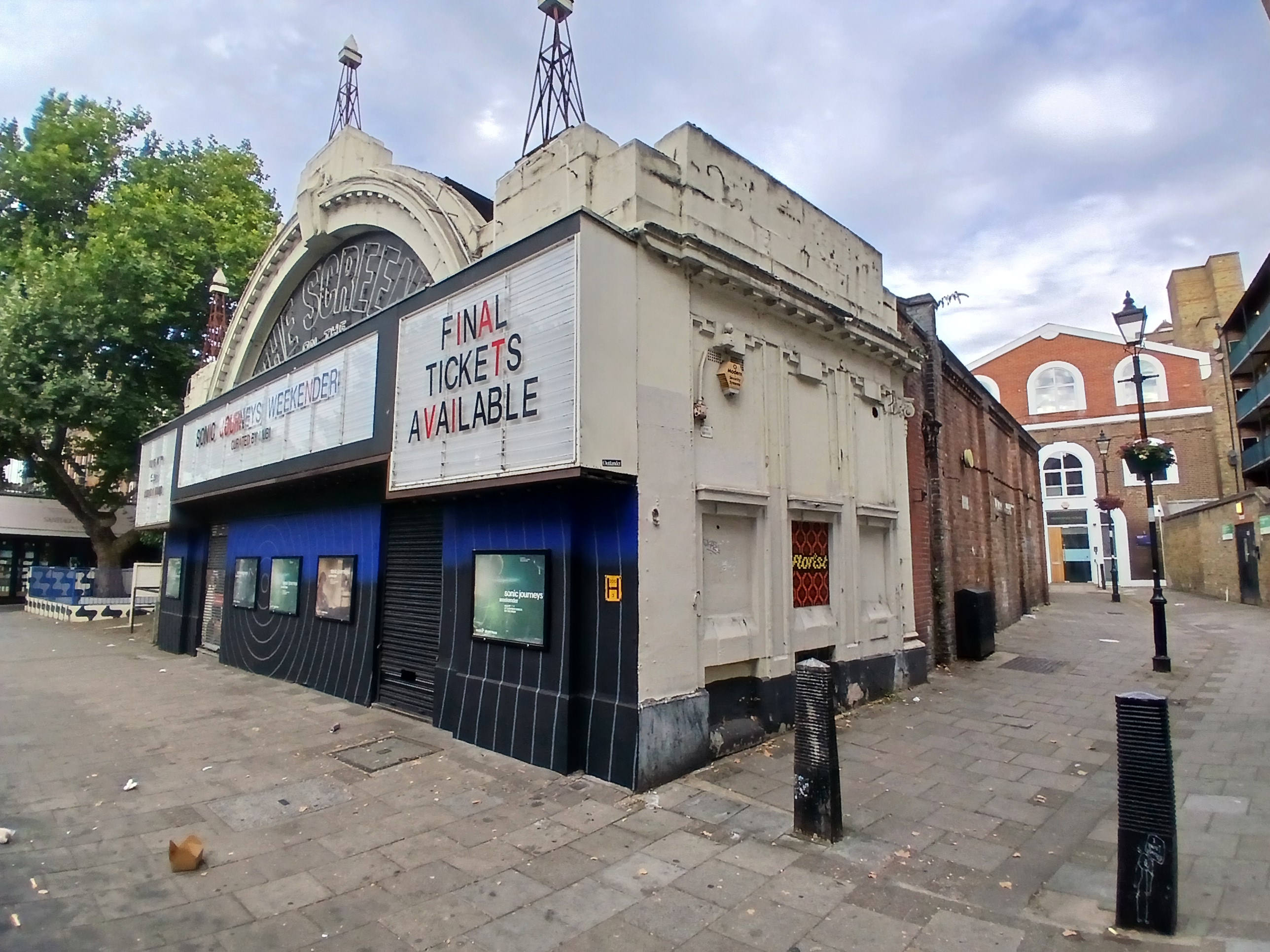
83 Upper Street London, Screen on the Green
The designer George Coles had several Art Deco cinemas to his name. One of his premium, Egyptian-themed creations on grandiose display today is Gracepoint church hall and events venue at 161-169 Essex Rd, London N1 2SN, right across Islington Green. The 1922 discovery of Tutankhamun’s tomb chamber greatly enhanced the craze that characterised the ensuing years, clearly manifested in the Art Deco of the period.
Originally opened as Carlton Cinema in 1930, showing the American comedy Welcome Danger as its very first film, the space’s interior has distinct elements of Empire style with Egyptian-style decorations. Converted into a bingo hall under the name Mecca Bingo Club in 1972, later, like several other cinemas, it was purchased by an evangelical Christian group, in this case, Resurrection Manifestations, in 2007.
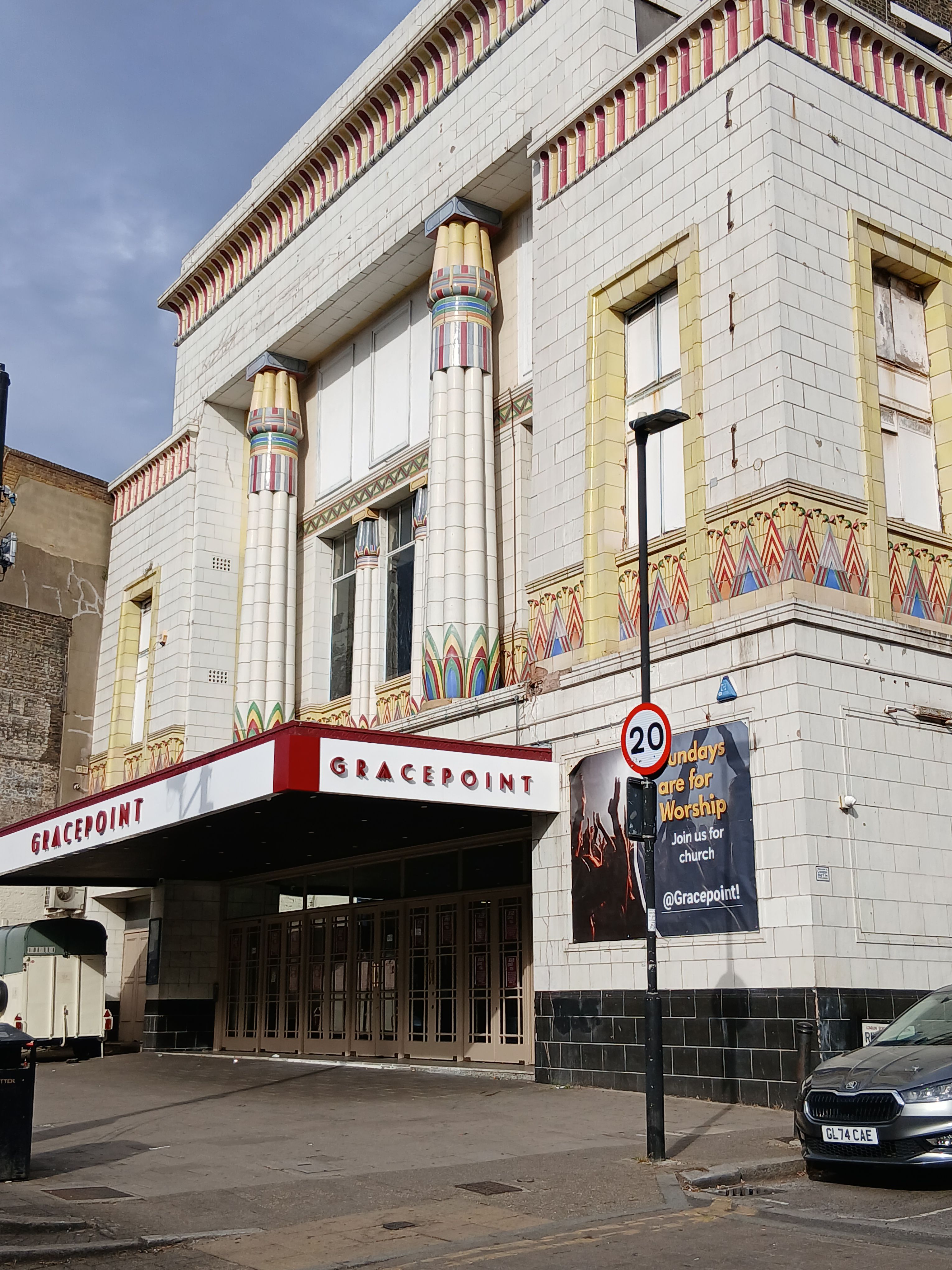
161-169 Essex Road, Islington, London Carlton Cinema, Islington
Savoy Cinema, which opened in 1940, was renamed ABC Cinema in 1962. Leased to Coronet Cinemas in 1979, the venue was clearly struggling as it closed soon after the VHS and the video library made its appearance, in 1983. It functioned as a snooker hall and games arcade for some years, when, 1996, it was turned into a J D Whetherspoon pub. It still has the grandiosity and functional ease of access one remembers about any elegant cinema of the past, on a downtown street front. As a passer-by, one relives the times when groups of teenagers, families, dating couples would walk up to the wide entrance with the posters and themes of the week’s films beaming down at them from the sides and the top.
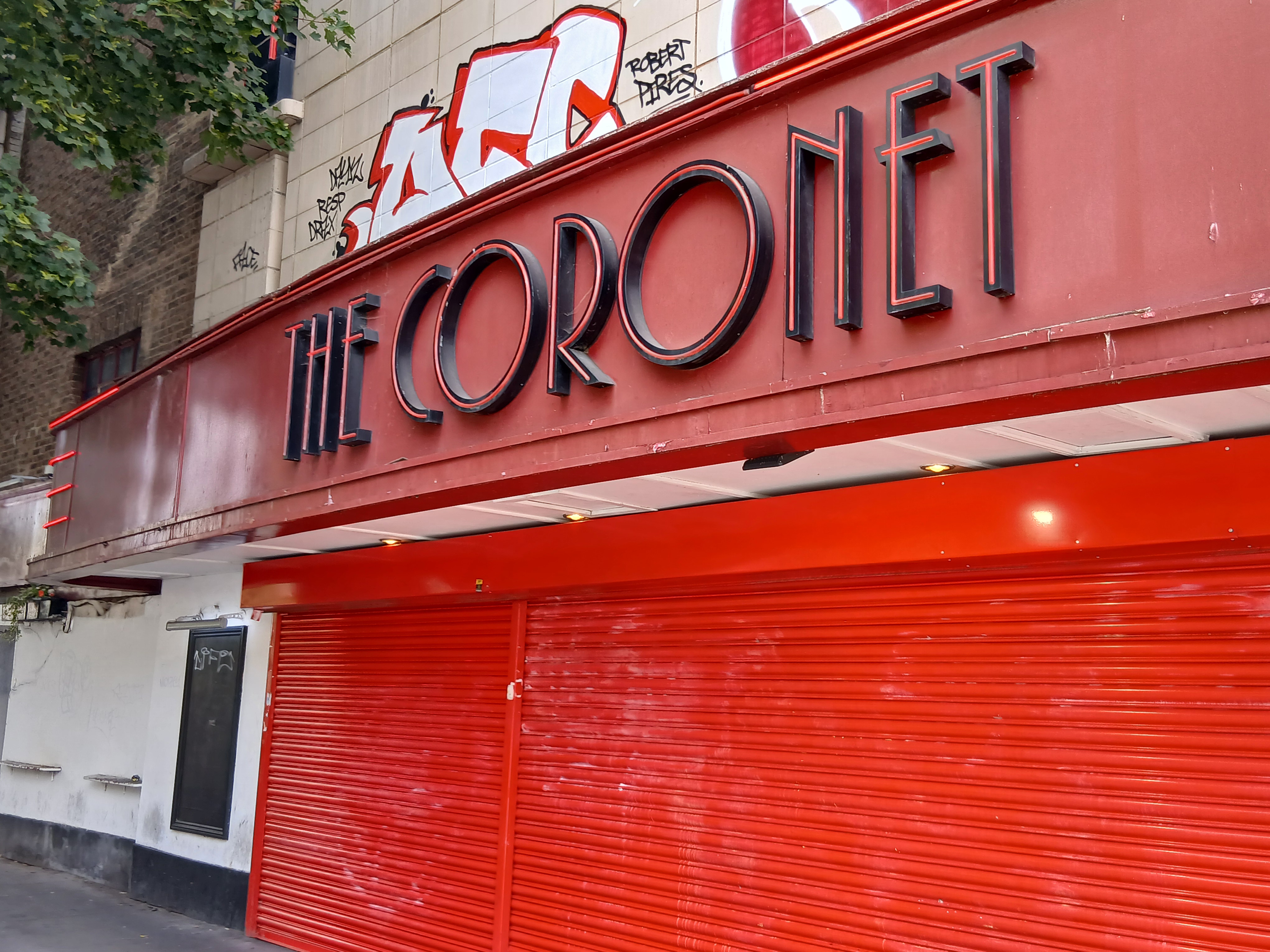
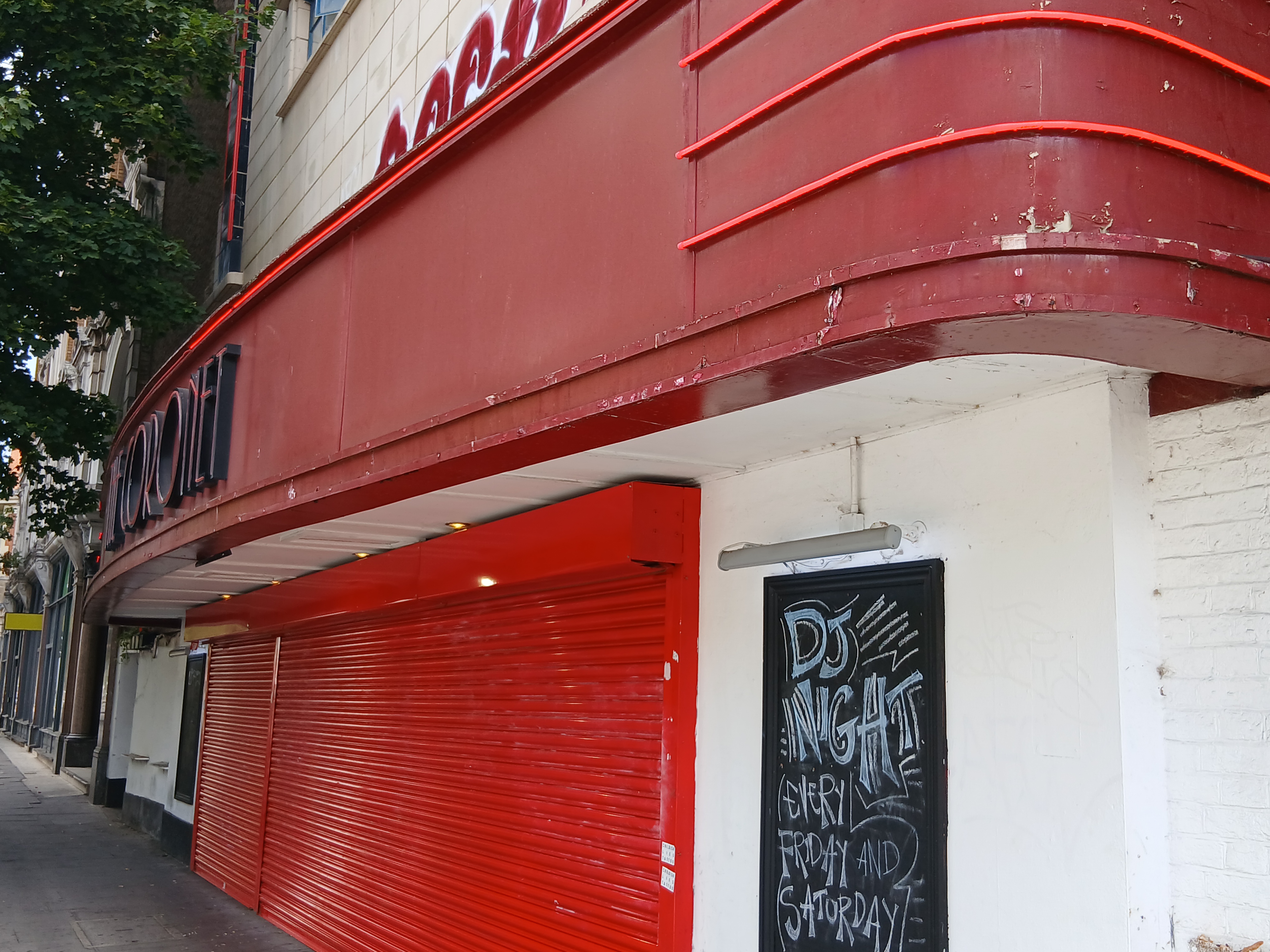
The Coronet, 338 Holloway Rd, Islington, London
Odeon Luxe, Islington (Islington Square, N1 1TU, Islington) originally opened as the Gaumont Theatre in 1938. It was designed by the American architect Charles Howard Crane. The building was of great architectural and historic significance, with an original BBC studio set up inside and used for initial broadcasts. Holding 3000 people, the original auditorium was celebrated as almost nothing else outside Central London’s Palladium and Holborn Empire. The original cinema also included an orchestra pit, dressing rooms, and rehearsal rooms.
After a 1944 German bomb attack, its auditorium was completely destroyed, the interior and the foyer, however, were miraculously preserved, as a result of which a successful reconstruction was possible by 1958. Its then debut film Run Silent, Run Deep introduced an era up until its renaming as Odeon in 1962. The building has showcased a mix of period and modern styles, and since the 60’s has been rebuilt to offer cinema-goers three screens, which was upgraded to an eight-screener in later decades. The current Odeon Luxe building is fitted with seven screens in modern auditoriums.
More information is available at the Cinema Treasures website with several further photographs of the interior.
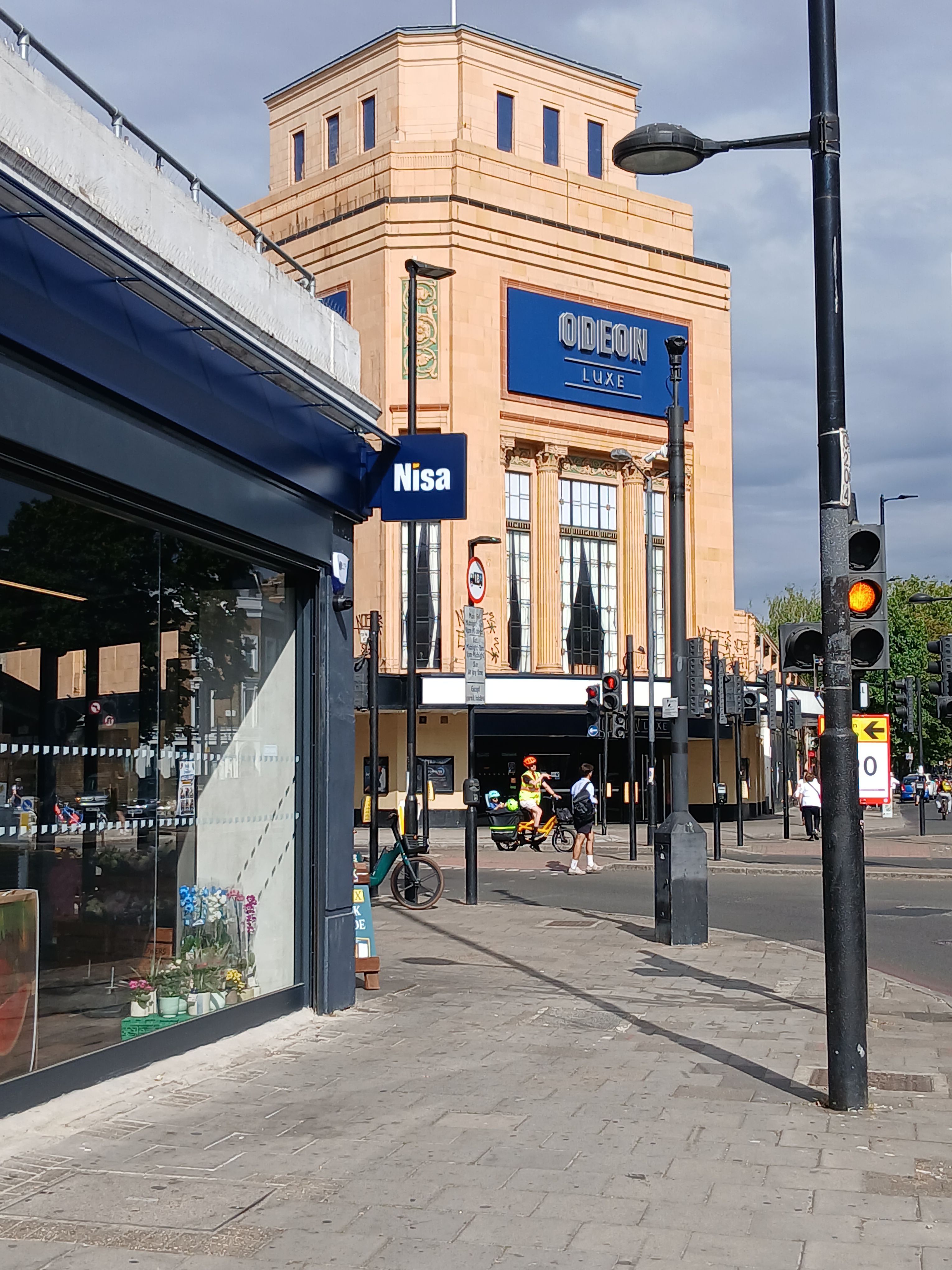
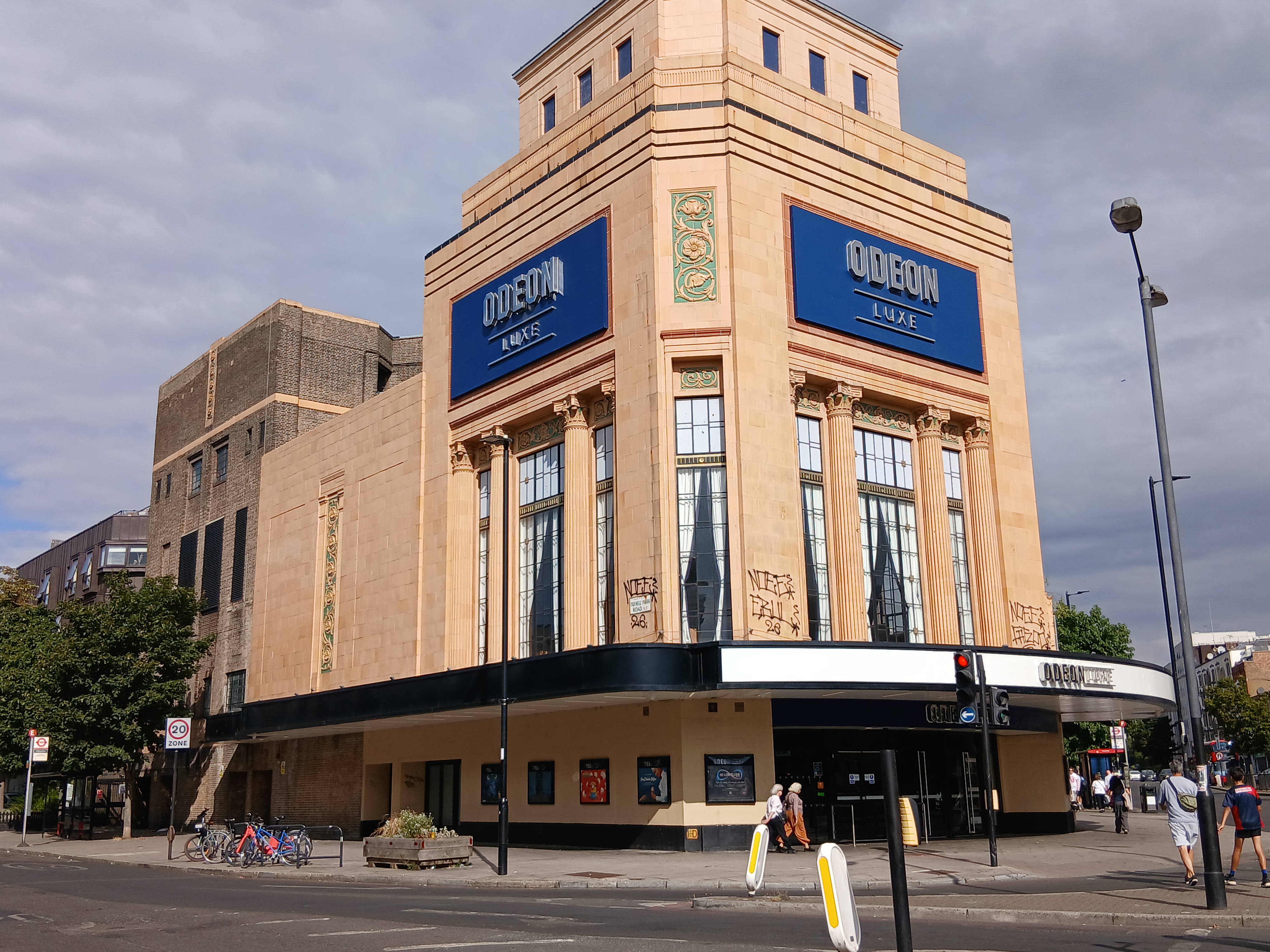
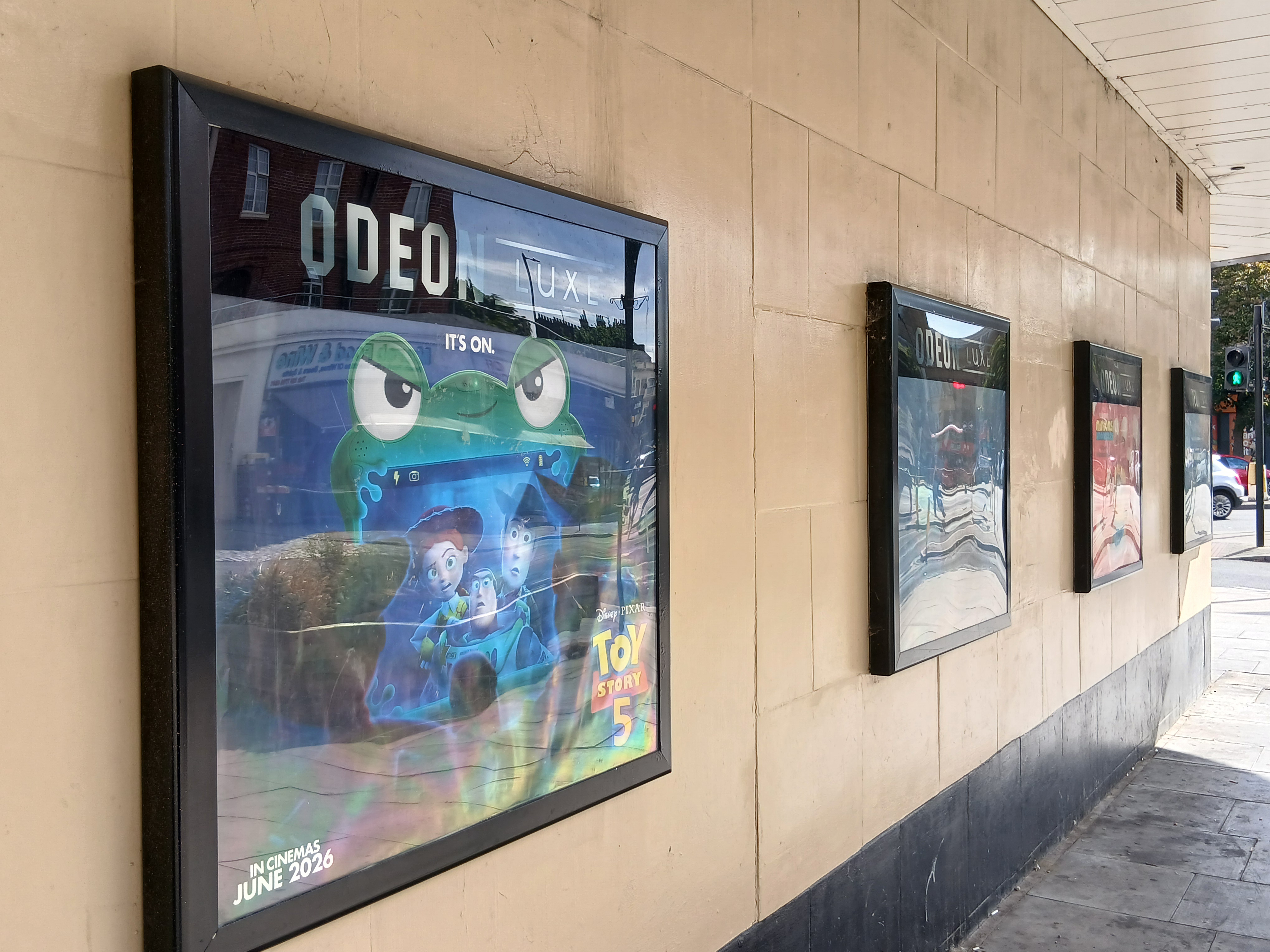
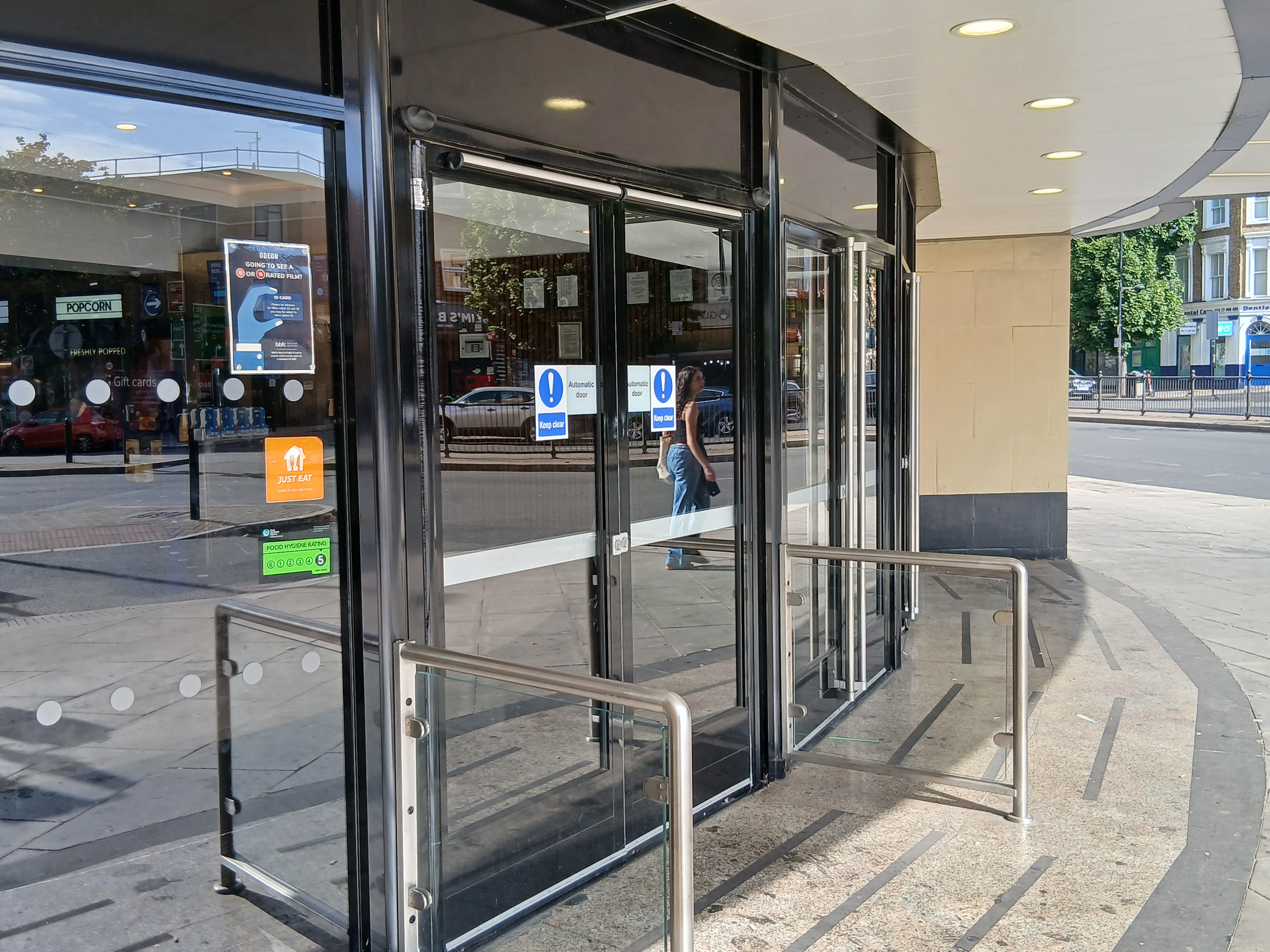
Odeon Luxe Islington (13 Esther Anne Pl, Islington, London)
All in all, modern, gentrified Islington displays an aura very different from its early Sunday morning slumber. It will be surrounded by a vibe of excitement and wonder once its bars, cafés, music halls, ice cream vendors, local supermarkets, community centres, and churches spring into action later in the day. The quiet streets, bus stops, and alleys of the early morning soon turn into a hustle and bustle of bar-goers, church volunteers, parents rushing children to dance-and-drama training, young Britons in a hurry to events, some to weekend shifts, others to catch trains from Paddington or St. Pancras. As elsewhere in London, Islington’s web of criss-crossing trains, buses, tube lines, cyclists, and pedestrians make it an organically pulsing social fabric of the metropolis displaying a genuine mix of residents and places of entertainment.
For more pictures of Islington’s cinemas, look at my website gallery:
(https://miklosfoldes.com/en/cinemas-islington-london)